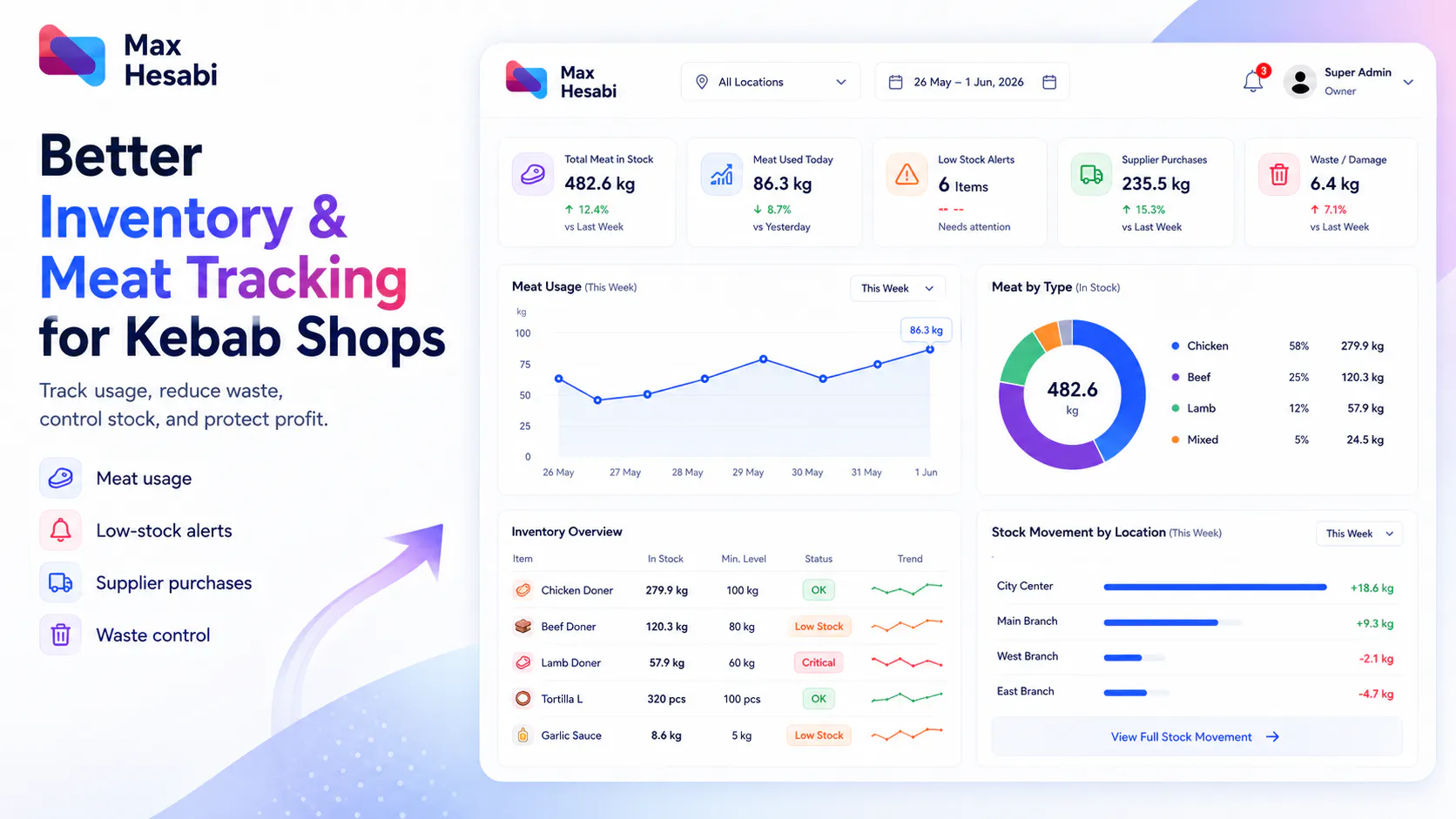
Why Kebab Shops Need Better Inventory and Meat Usage Tracking
See why kebab shops need clear inventory, meat usage, supplier purchase, waste, and low-stock tracking to protect profit and run smoother operations.
Inventory Control Is Critical for Kebab Shop Profit
Kebab shops depend on fast-moving stock. Meat, bread, vegetables, sauces, drinks, packaging, and cleaning supplies move every day, and small mistakes can quickly reduce profit.
If owners only check inventory at the end of the month, they may miss waste, overuse, damaged items, supplier price changes, or low-stock problems that affected service during the month.
Why Meat Usage Needs Special Attention
Meat is usually one of the highest-cost items in a kebab shop. Because it is used constantly throughout the day, even small differences in portioning, preparation, waste, or recording can change profit significantly.
Clear meat usage tracking helps owners understand:
- How much meat was purchased
- How much meat was used during service
- Whether usage matches sales volume
- How much was damaged, wasted, or adjusted
- Which branch is using more than expected
- When new stock needs to be ordered
Without this visibility, a shop can have strong sales but still lose margin through overuse or waste.
The Problem with Manual Stock Notes
Many kebab shops start with paper notes, phone messages, spreadsheets, or memory-based stock checks. That can work for a short time, but it becomes unreliable as the business gets busier or adds more staff and locations.
Manual tracking often creates problems such as:
- Stock counts recorded late
- Purchases not linked to suppliers
- Damaged or wasted items not reported
- Managers using different item names
- Low stock discovered during service
- Owners not knowing which location has the issue
Better inventory tracking gives the team one clear place to record what happened.
Track What Comes In, What Goes Out, and What Gets Wasted
Good kebab shop inventory is not only about counting stock. It should show the movement of important items throughout daily operations.
Owners and managers should track:
- Supplier purchases and delivery quantities
- Meat and ingredient usage
- Packaging and takeaway supplies
- Damaged, spoiled, or wasted stock
- Manual adjustments after stock checks
- Transfers between branches
- Low-stock warnings for essential items
This makes inventory more useful for daily decisions, not just accounting reports.
Connect Supplier Purchases with Inventory
Supplier purchases explain both stock movement and cost. When a meat delivery arrives, the business should know which supplier delivered it, which location received it, how much was received, and what it cost.
Connecting purchases with inventory helps answer questions like:
- Which supplier is affecting meat cost the most?
- Are purchases increasing faster than sales?
- Did one location order more than expected?
- Were any items missing or damaged on delivery?
- Does stock usage match the amount purchased?
When supplier costs, stock levels, and sales are connected, owners can spot problems earlier.
Use Low-Stock Warnings Before Service Is Affected
Running out of a key item during a busy service can hurt sales, slow the team down, and frustrate customers. Low-stock warnings help managers act before an item becomes a service problem.
Low-stock checks are especially useful for meat, bread, sauces, drinks, packaging, and other items that are difficult to replace quickly during peak hours.
Compare Inventory Across Locations
For kebab shops with more than one branch, inventory should be reviewed by location. One branch may use more meat than expected, another may waste more packaging, and another may order too late.
Location-level inventory helps owners compare branches fairly and understand whether stock usage matches sales, supplier purchases, payroll, and manager notes.
How Max Hesabi Helps Kebab Shops
Max Hesabi helps kebab shops organize inventory and meat usage inside the same system used for sales, expenses, suppliers, staff costs, and reporting.
Kebab shop owners can use Max Hesabi to:
- Add important inventory items
- Track meat usage and stock movement
- Record supplier purchases by location
- Monitor damaged or wasted items
- Review low-stock warnings
- Compare inventory activity across branches
- Connect stock activity with sales and profit reports
Key Benefits for Kebab Shop Owners
Better meat cost control
Owners can see whether meat usage matches sales and whether waste or overuse is affecting profit.
Less waste and damage
Damaged, spoiled, or wasted items can be recorded instead of disappearing from the numbers.
Clearer supplier spending
Purchases can be reviewed by supplier, location, date, item, and cost.
Fewer stock surprises
Low-stock warnings help managers prepare before service is affected.
Stronger profit reporting
Inventory becomes part of the real profit picture alongside sales, expenses, payroll, and supplier costs.
Final Thought
Kebab shop profit is closely connected to inventory discipline. When meat usage, purchases, waste, and low-stock situations are tracked clearly, owners can make better decisions with current information.
Better inventory tracking does not only prevent shortages. It helps protect margin, reduce waste, improve supplier control, and run smoother daily operations.